
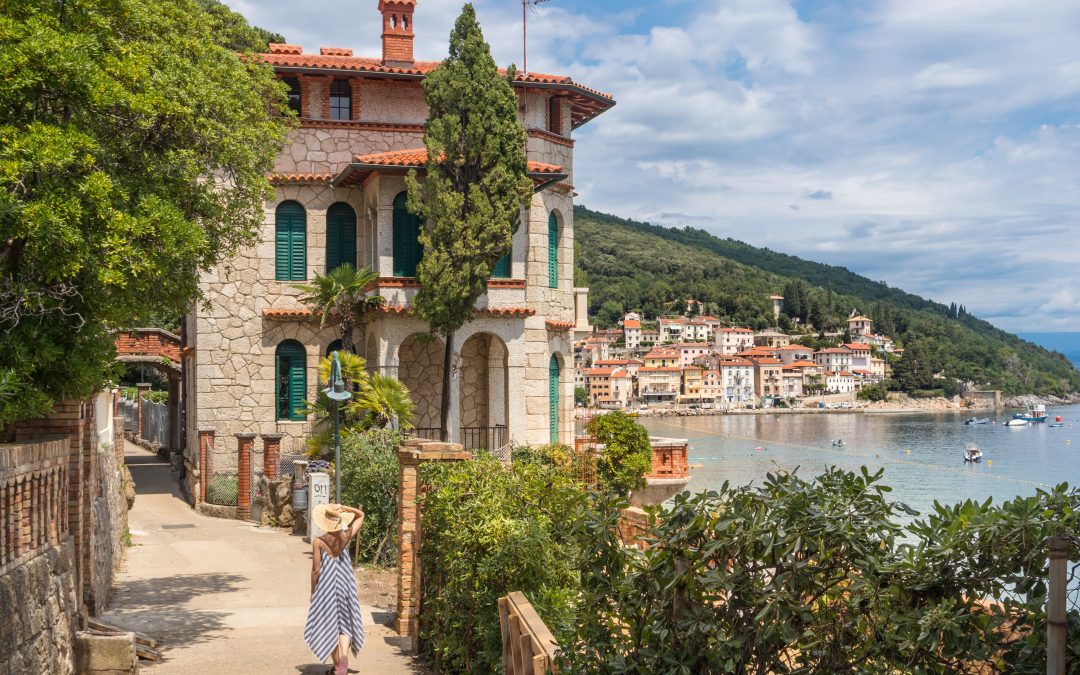
Opatija, Croatia: Where Wellness Tourism Began and the Art of Healing Still Lives
What if one of the most important things we could bring home from a journey wasn't something we purchased, photographed, or checked off a bucket list, but a renewed sense of well-being?
After spending more than 30 years working in healthcare, I've developed a deep appreciation for the remarkable capabilities of modern medicine. I've witnessed the difference that skilled professionals, scientific advances, and compassionate care can make in people's lives.
But I've also come to appreciate something that doesn't always receive the attention it deserves: the relationship between our surroundings, our daily habits, our emotional well-being, and our overall health.
I've long been fascinated by holistic healing and natural remedies. Not because I believe they should replace conventional medicine, but because I believe there's value in understanding how different approaches to well-being can complement one another.
Sometimes the simplest things can make a meaningful difference.
A good night's sleep. A walk in the fresh air. Nourishing food prepared with care. Time spent in nature. Meaningful conversation. The opportunity to slow down long enough to appreciate the world around us.
And sometimes, changing our surroundings can change our perspective.
That brings me to a remarkable little town along Croatia's Adriatic coast.
Its name is Opatija, and its story may change the way you think about wellness travel.
Opatija, Croatia: A Wellness Destination More Than 180 Years in the Making
When most people think about Croatia, they imagine Dubrovnik's medieval walls, the beautiful islands of Dalmatia, ancient Roman architecture, or the brilliant blue waters of the Adriatic.
And understandably so.
But tucked along the Kvarner Gulf, beneath the forested slopes of Mount Učka, is a destination with a very different story to tell.
Opatija is a place where people have been traveling in search of better health, relaxation, and restoration since the 19th century.
Long before wellness became a multibillion-dollar global industry, European travelers were coming here because they believed the combination of mild weather, fresh sea air, beautiful surroundings, and a slower pace of life could improve their health.
They weren't necessarily looking for adventure.
They were looking for something perhaps even more valuable.
They wanted to feel better.
And what fascinates me is that, despite everything we've learned about medicine and human physiology over the past two centuries, many of the principles that attracted those early visitors remain relevant today.
Regular movement matters. Rest matters. Nutrition matters. Stress matters. Our environment matters.
Perhaps those early wellness travelers understood something we've allowed ourselves to forget in our increasingly busy lives.
Taking care of ourselves isn't an indulgence. It's an investment in our quality of life.
The Natural Geography Behind Opatija's Healing Reputation
Where the Adriatic Sea Meets the Mountains
One of the first things worth understanding about Opatija is its geography.
The town occupies a sheltered stretch of coastline between the Adriatic Sea and the Učka mountain range.
That location creates a comparatively mild coastal microclimate, particularly when compared with the colder inland regions of Central Europe.
During the 1800s, this was enormously appealing.
Imagine spending a long, damp winter in Vienna, Budapest, or another European city, particularly during a period when homes were often poorly heated by today's standards and infectious respiratory illnesses were a serious concern.
Now imagine traveling south to a beautiful coastal town where you could spend more time outdoors, stroll beside the sea, and enjoy the relative warmth of the Mediterranean environment.
It's not difficult to understand the attraction.
Physicians of the era often recommended climatic cures, sometimes called climatotherapy, for patients suffering from respiratory complaints, fatigue, and various chronic conditions.
The idea was that a change in climate and surroundings might support recovery.
Today, we should be careful about interpreting those historical recommendations as established medical treatments. Sea air is not a cure for respiratory disease, and climate alone cannot replace appropriate medical care.
Nevertheless, the environment can influence comfort, activity, sleep, and stress.
And those are meaningful aspects of health.
The Role of Nature in Our Well-Being
Something I've always found interesting is how the natural environment affects the way we feel.
There's a noticeable difference between spending a day surrounded by traffic, noise, and constant demands and spending a day walking through a garden or beside the water.
Research increasingly explores the relationship between exposure to natural environments and improvements in psychological well-being.
The evidence varies depending on the outcome being studied, but the broader lesson is worth considering.
We weren't designed to spend every waking moment staring at screens, sitting indoors, or racing from one obligation to the next.
Opatija offers a wonderful setting for reconnecting with the natural world.
The sea is never far away. Historic parks provide inviting green spaces. The mountains create a dramatic backdrop. And the town's famous coastal promenade encourages visitors to do something wonderfully uncomplicated.
Walk.
Villa Angiolina: The Beginning of Opatija's Wellness Tourism Story
A Beautiful Villa That Helped Change a Town
The story of Opatija's transformation into a fashionable resort begins in 1844.
That year, Iginio Scarpa, a wealthy merchant from nearby Rijeka, built Villa Angiolina, named for his wife.
The villa became a gathering place for distinguished guests, introducing influential visitors to the beauty of this previously modest coastal community.
Among its notable early guests was Ban Josip Jelačić, an important figure in Croatian history.
As word spread about Opatija's favorable climate and beautiful surroundings, the town began attracting increasing attention from wealthy travelers and members of European society.
What followed was an extraordinary transformation.
Hotels appeared. Villas were constructed. Landscaped gardens flourished. Promenades were developed.
By the late 19th century, Opatija had become one of the fashionable seaside retreats of the Austro-Hungarian Empire.
And unlike destinations developed primarily around entertainment, Opatija's identity became closely associated with health.
The Year 1889: An Important Milestone
In 1889, Opatija received official recognition as a climatic health resort under Austro-Hungarian administration.
That designation helped establish its position within the European tradition of therapeutic travel.
People weren't simply visiting to admire the scenery.
They were coming for extended stays, often following routines that included walking, rest, bathing, carefully managed physical activity, and medical consultations.
In some respects, it was an early form of the wellness retreat.
Of course, access to these experiences was largely restricted to people who could afford them.
The aristocracy and wealthy industrialists had the luxury of spending weeks or even months away from their everyday responsibilities.
But the underlying philosophy eventually influenced broader ideas about preventive health, recuperation, and travel.
And that influence continues today.
The European Spa Tradition: When Travel Became Part of Healthcare
Understanding the Original Meaning of a Health Resort
When we hear the word spa, many of us picture massages, facials, aromatic oils, and perhaps a glass of something refreshing beside a swimming pool.
There's certainly nothing wrong with any of those things.
But the European health-resort tradition developed around a much broader concept.
Across Europe, towns became known for their mineral springs, thermal waters, favorable climates, and opportunities for therapeutic bathing.
Places such as Baden-Baden in Germany, Karlovy Vary in the Czech Republic, and other historic spa communities attracted visitors seeking relief from illness or the stresses of everyday life.
Some destinations specialized in mineral waters.
Others emphasized thermal bathing.
Opatija's particular attraction was its coastal climate and marine environment.
Visitors participated in routines that often combined rest, physical activity, bathing, nutrition, and physician-directed care.
The German term Kurort, generally referring to a health resort, captures this historical approach.
What interests me is how closely some of these practices resemble aspects of modern lifestyle medicine.
We now have substantial evidence supporting the benefits of regular physical activity, adequate sleep, balanced nutrition, and stress management.
Not every historical treatment has stood the test of scientific scrutiny.
Some were ineffective, and others were based on medical theories that have since been abandoned.
But the broader idea that health involves more than treating an illness remains important.
Treating the Whole Person
During my years in healthcare, I came to appreciate that patients are never simply a diagnosis.
They're individuals with families, responsibilities, fears, hopes, habits, and personal circumstances.
Two people with similar medical conditions may experience illness and recovery very differently.
Their physical health matters, certainly.
But so do their emotional well-being, support systems, living environments, and ability to participate in everyday life.
That is one of the reasons holistic approaches interest me.
At their best, they encourage us to consider the whole person.
For me, holistic healthcare does not mean rejecting science or substituting unproven remedies for effective treatments.
It means recognizing that good health is influenced by many interconnected factors.
And that brings us to another fascinating chapter in Opatija's story.
Thalassotherapy: Can the Sea Contribute to Better Health?
An Ancient Idea with a Modern Name
The word thalassotherapy comes from the Greek word thalassa, meaning sea.
It refers to practices that use seawater and other marine elements as part of wellness or therapeutic programs.
Depending on the facility, treatments may include seawater bathing, hydrotherapy, marine-inspired body treatments, supervised exercise, and relaxation.
The concept has deep historical roots.
Coastal communities have long associated the sea with cleansing, rejuvenation, and healing.
Today, marine-based wellness treatments are offered at resorts and specialized facilities around the world.
But Opatija has a particularly interesting connection to this tradition.
Thalassotherapia Opatija: Where Wellness Meets Medical Rehabilitation
Established in 1957, Thalassotherapia Opatija is a specialized medical institution with a focus on cardiovascular care, physical medicine, and rehabilitation.
This is where Opatija's story becomes especially interesting to me as someone with a healthcare background.
The town isn't simply trading on a romantic historical reputation.
It has an established medical infrastructure connected to its health-resort identity.
Thalassotherapia Opatija provides services involving areas such as cardiovascular rehabilitation, physical rehabilitation, and preventive healthcare.
And it's important to distinguish these professional medical services from the broader world of spa treatments.
A supervised rehabilitation program developed by qualified healthcare professionals is very different from enjoying a seawater bath or massage.
Both may have a place in a person's overall wellness routine, but they serve different purposes.
A massage might help someone relax.
A warm-water experience might provide temporary comfort.
A structured rehabilitation program, however, involves clinical assessment, appropriate exercise, monitoring, and individualized medical guidance.
We should never confuse one with the other.
What Does Science Actually Tell Us About Seawater Treatments?
I think this is where a healthy sense of curiosity becomes particularly important.
There are interesting studies involving hydrotherapy, aquatic exercise, and certain forms of balneotherapy, or therapeutic bathing.
For some people, appropriately supervised water-based exercise can improve mobility, conditioning, and physical function.
Warm-water immersion may also provide temporary relief from certain types of discomfort.
But claims that seawater minerals are absorbed through the skin in amounts sufficient to cure diseases require much more skepticism.
The evidence supporting marine-based wellness treatments is not equally strong for every condition or claimed benefit.
That doesn't mean we should dismiss the entire experience.
It simply means we should understand what a treatment can reasonably offer.
Personally, I find it perfectly acceptable to enjoy a restorative spa experience without expecting it to perform miracles.
Sometimes relaxation is reason enough.
The Lungomare: Perhaps Opatija's Most Accessible Wellness Experience
Ten Kilometers of Coastal Beauty
If I were introducing someone to Opatija's wellness heritage, one of the first places I'd want them to experience would be the Lungomare.
This beautiful coastal promenade stretches approximately 10 kilometers, connecting Volosko, Opatija, Ičići, Ika, and Lovran.
Developed in stages during the late 19th and early 20th centuries, it became an important part of the resort experience.
Imagine the people who have walked this route over the generations.
European aristocrats seeking respite from demanding social lives.
Visitors recovering from illness.
Artists searching for inspiration.
Couples enjoying the sea.
And generations of residents simply appreciating their beautiful surroundings.
The Lungomare is more than a scenic walkway.
It's a living reminder of the idea that movement and environment can contribute to well-being.
The Remarkable Health Benefits of Walking
After decades in healthcare, I sometimes wonder whether we make wellness unnecessarily complicated.
We search for the newest treatment, supplement, program, or breakthrough.
Meanwhile, one of the most accessible health-promoting activities is something many of us learned to do as toddlers.
Walking.
Regular walking can support cardiovascular health, help maintain mobility, contribute to better sleep, and improve mood.
For many adults, it is also a practical way to incorporate physical activity into daily life.
Of course, everyone's abilities and medical circumstances are different.
Some people may need modifications, assistance, or guidance from a healthcare professional.
But the general principle remains.
Movement matters.
And what better encouragement to move than a beautiful path overlooking the Adriatic?
There's something appealing about walking without rushing.
Not counting every step.
Not worrying about how quickly we reach our destination.
Simply enjoying the experience.
Perhaps stopping for a coffee, admiring a historic villa, or watching fishing boats return to harbor.
For me, that's where wellness and travel begin to intersect in a particularly meaningful way.
Gardens, Camellias, and the Restorative Power of Green Spaces
The Legacy of Angiolina Park
One of Opatija's most beautiful historic spaces is Angiolina Park, surrounding Villa Angiolina.
The park reflects the town's long association with cultivated gardens, exotic plants, and gracious outdoor living.
Its camellias have become an enduring symbol of Opatija.
Gardens like this remind me that wellness doesn't always require a formal treatment or carefully scheduled activity.
Sometimes it's simply about giving ourselves permission to be still.
To notice the colors of flowers.
To listen to birds.
To enjoy the shade of a tree.
To appreciate the work and patience involved in creating a beautiful garden.
Why Time in Nature Matters
Researchers have investigated how time spent in green spaces may influence stress, mood, and general well-being.
Although the results differ among studies, there's encouraging evidence that contact with nature can contribute to psychological restoration.
Some people enjoy gardening.
Others prefer hiking, birdwatching, or simply sitting outdoors.
I don't believe there's one perfect formula.
The important thing is finding ways to reconnect with the natural world.
And Opatija offers plenty of opportunities.
Its gardens, waterfront, and proximity to Mount Učka create a wonderful combination of cultivated beauty and natural landscapes.
For travelers interested in wellness, those surroundings can be every bit as meaningful as the treatments available inside a hotel.
Natural Remedies, Traditional Wisdom, and the Importance of Asking Questions
My Personal Fascination with Natural Healing
I've always been interested in the ways people have used plants, food, water, and other natural resources to support health.
Throughout history, cultures have developed their own traditions of healing.
Some have contributed to modern medicine.
Others remain culturally meaningful even when their medical benefits have not been established.
And some traditional remedies can cause harm, particularly when they interact with medications or delay necessary treatment.
My healthcare background makes me curious about these practices, but it also makes me cautious.
I want to understand the story behind a remedy.
Where did it originate?
Who used it?
What was it intended to accomplish?
What does modern research tell us about its safety and effectiveness?
Those questions can open fascinating conversations.
Croatia's Mediterranean Traditions
Croatia's coastal regions have longstanding culinary and cultural traditions involving olive oil, aromatic herbs, locally grown produce, seafood, and seasonal ingredients.
Rosemary, sage, lavender, and other Mediterranean plants are part of the landscape and cultural heritage.
Some have histories of traditional medicinal use.
But I think it's important to distinguish between enjoying a plant as part of a meal, appreciating its fragrance, and using concentrated preparations medicinally.
Natural does not automatically mean safe.
An herbal tea, essential oil, or supplement may have effects that differ substantially from those of the same plant used in ordinary cooking.
And products marketed as natural remedies are not always supported by reliable evidence.
Still, learning how communities have used their local resources over generations can be a wonderful way to understand a destination.
Imagine meeting someone who cultivates medicinal or culinary herbs.
Or visiting a family olive grove and learning about the harvest.
Or speaking with a knowledgeable local practitioner about the relationship between traditional customs and contemporary healthcare.
These are the kinds of experiences that turn a pleasant holiday into a meaningful journey of discovery.
Food as Nourishment: The Mediterranean Connection
The Value of Eating Well
One of the things I appreciate about travel is the opportunity to experience different food cultures.
And when it comes to wellness, food deserves an important place in the conversation.
The Mediterranean dietary pattern has been studied extensively for its relationship with cardiovascular health.
It generally emphasizes vegetables, fruits, legumes, whole grains, nuts, olive oil, and other minimally processed foods, with fish and seafood often playing an important role.
That doesn't mean every traditional Mediterranean dish is automatically healthy.
Nor does it mean we should reduce a destination's culinary heritage to a list of nutritional benefits.
Food is also culture, memory, hospitality, and connection.
Along Croatia's coast, fresh seafood, olive oil, seasonal produce, and regional specialties provide wonderful opportunities to explore that relationship.
Meals Are About More Than Nutrients
There's another dimension of eating well that I find especially meaningful.
Sharing a meal.
Sitting around a table with family or friends.
Taking time to enjoy the food.
Listening to stories.
Laughing.
Learning something about the people who prepared it.
Modern life doesn't always make room for those experiences.
We eat in our cars, at our desks, or while looking at our phones.
Travel can give us an opportunity to rediscover the pleasure of a meal that isn't rushed.
I wouldn't claim that every leisurely dinner is a medical intervention.
But meaningful social connections are associated with better health and well-being.
And enjoying food in good company is one of life's simple pleasures.
Wellness Isn't Always About Doing More
The Importance of Rest
Something I've noticed over the years is that many of us have become uncomfortable with the idea of doing nothing.
We fill our calendars.
We measure productivity.
We feel guilty when we're not accomplishing something.
And sometimes we bring those same habits on vacation.
We create itineraries so full that we return home needing another holiday.
I love exploring new places. I enjoy learning, discovering, and experiencing things I might never encounter at home.
But I also appreciate time to relax.
For me, the ideal journey offers a balance.
There should be moments that challenge our curiosity and moments that allow us to simply enjoy where we are.
Opatija seems particularly well suited to that philosophy.
You can explore its history, walk the promenade, visit nearby communities, enjoy regional cuisine, and discover the surrounding landscapes.
But you can also sit beside the sea and do absolutely nothing.
And that's perfectly acceptable.
Sleep, Stress, and Recovery
We know that adequate sleep plays an essential role in physical and mental health.
We also know that chronic stress can negatively affect many aspects of well-being.
Travel isn't a guaranteed solution to either problem.
In fact, poorly planned travel can sometimes make stress worse.
But a thoughtfully paced journey can create opportunities for rest, enjoyable physical activity, and a temporary break from everyday pressures.
That's one reason I believe the way a journey is designed matters just as much as the destination.
It's not simply about what travelers see.
It's about how they experience it.
And how they feel along the way.
From Aristocratic Retreat to Modern Wellness Destination
How Opatija Has Evolved
Today's Opatija is quite different from the resort town that welcomed wealthy European visitors in the late 1800s.
Its historic hotels and villas remain important parts of the landscape, but the destination now offers a much broader range of experiences.
Visitors can enjoy contemporary spa facilities, coastal recreation, regional cuisine, cultural attractions, and nearby natural areas.
Medical institutions continue to provide specialized services.
And the town's historical identity remains visible in its architecture, parks, and promenades.
What makes Opatija particularly compelling is that its wellness reputation is not something recently invented by a marketing department.
It is rooted in the destination's history.
That authenticity matters to me.
When we travel, I want to understand what makes a place different.
Why did people come here?
What did they believe?
How did those beliefs influence the community?
And what can we learn from that history today?
Opatija offers interesting answers to all those questions.
What Opatija Can Teach Us About Modern Wellness Travel
Wellness Is More Than a Spa Appointment
I certainly enjoy the idea of a relaxing massage or an afternoon spent at a beautiful spa.
But I don't believe wellness travel should be defined solely by treatments and amenities.
A destination can offer an extraordinary spa and still leave visitors feeling disconnected from the place they've traveled so far to experience.
For me, the most meaningful wellness journeys create connections.
Connections with nature.
Connections with local people.
Connections with culture and history.
And perhaps most importantly, opportunities to reconnect with ourselves.
Opatija's story suggests that wellness can be something woven into the entire travel experience.
A morning walk beside the sea.
A conversation about the history of European medicine.
A visit to a beautiful garden.
A thoughtfully prepared meal.
An afternoon without an agenda.
Each experience offers something different.
Together, they can create a journey that feels restorative without becoming overly structured or clinical.
The Difference Between Wellness and Medical Tourism
There's also an important distinction between wellness tourism and medical tourism.
Wellness tourism generally focuses on activities intended to maintain or improve personal well-being.
Medical tourism involves traveling to receive specific healthcare services, procedures, or treatments.
Opatija has connections to both.
Its spas, natural environment, and recreational opportunities appeal to wellness travelers.
Its medical institutions provide professional healthcare and rehabilitation services.
Travelers should understand that distinction, especially when evaluating treatments advertised as therapeutic.
Anyone considering medical services while traveling should consult qualified healthcare professionals and understand the credentials, risks, and continuity-of-care requirements involved.
A wellness holiday can be a wonderful experience.
But it should never be mistaken for a substitute for necessary medical care.
Could Opatija Inspire a Different Kind of Epic Exploration?
A Journey Through the History of Healing
At Epic Explorations, we believe travel should offer more than a collection of attractions.
We want our travelers to discover the stories behind the places they visit.
To meet interesting people.
To explore ideas.
To come home with new perspectives.
And Opatija has the potential to inspire a fascinating journey.
Imagine beginning with the history of European health resorts.
Learning how 19th-century physicians understood climate, rest, and recovery.
Exploring the elegant villas and gardens that attracted generations of visitors.
Walking portions of the Lungomare while discussing the role of movement in lifelong health.
Meeting knowledgeable professionals who can explain how modern rehabilitation and preventive medicine differ from historical health cures.
Discovering the culinary traditions of the Kvarner region.
And perhaps exploring the use of local herbs and plants through the eyes of people who cultivate them.
Such a journey wouldn't need to promise miraculous transformations.
Nor would it need to present every traditional remedy as scientifically proven.
Instead, it could invite travelers to explore an intriguing question.
What have different generations understood about living well, and what can we learn from them today?
The Importance of Balance
One thing Robert and I appreciate about travel is that we don't always approach a destination in exactly the same way.
He loves following an interesting story wherever it leads.
I'm fascinated by those stories, too, but I also value opportunities to relax, absorb my surroundings, and enjoy the moment.
I think those perspectives complement one another.
A wonderful journey should offer enough discovery to satisfy our curiosity without making us feel as though we're racing through a checklist.
And a wellness-focused journey should be about more than simply scheduling one treatment after another.
It should create space.
Space to learn.
Space to explore.
Space to connect.
And space to rest.
Opatija seems like a natural setting for that kind of experience.
A Few Lessons I'm Taking Away from Opatija's Story
The more I learn about Opatija, the more I'm reminded that some of the most important elements of well-being are surprisingly uncomplicated.
We need movement, but it doesn't always have to be strenuous.
We need nourishment, but food can also be an opportunity for pleasure and connection.
We need rest, but that doesn't mean we have to stop being curious.
We benefit from relationships, meaningful experiences, and opportunities to engage with the world around us.
And while modern medicine has given us extraordinary tools to diagnose and treat disease, maintaining our well-being also involves the choices we make in everyday life.
I don't believe there's a single destination, treatment, supplement, or philosophy that holds all the answers.
Human health is far too complex for that.
But I do believe we can learn something valuable by exploring how other cultures and generations have approached the idea of living well.
Opatija offers a particularly beautiful place to begin that exploration.
The Art of Healing May Begin with the Art of Living
Perhaps the most interesting thing about Opatija isn't its history as a health resort.
Perhaps it's the question that history invites us to ask.
What does it really mean to be well?
Is wellness simply the absence of illness?
Or does it also involve our ability to enjoy life, maintain meaningful relationships, remain curious, appreciate beauty, and find moments of peace?
After more than three decades in healthcare, I would never underestimate the importance of good medical care.
But I also believe our quality of life deserves attention.
And I think travel, when approached thoughtfully, can play a meaningful role in that conversation.
Not because a beautiful destination can cure everything that troubles us.
But because experiencing the world differently can sometimes help us think differently about our own lives.
Maybe that's why Opatija's story resonates with me.
For more than 180 years, people have been drawn to this little stretch of Adriatic coastline in search of something restorative.
The treatments have changed.
Our medical knowledge has advanced.
The grand hotels have welcomed generations of new travelers.
But the sea is still there.
The gardens still bloom.
And the Lungomare still invites us to walk.
Sometimes, perhaps, the most valuable thing we can do for ourselves is to slow down long enough to enjoy the journey.
And that, to me, is a beautiful kind of wellness.
Linda Riesmeyer is Partner and Director of Operations, Traveler Experience, at Epic Explorations. Following more than 30 years in the healthcare industry, including her career in nursing, Linda brings a thoughtful appreciation for personal well-being, holistic approaches to health, and the importance of caring for the whole person. Together with Robert, she helps shape journeys that balance meaningful discovery with opportunities to relax, reconnect, and enjoy the experience.