
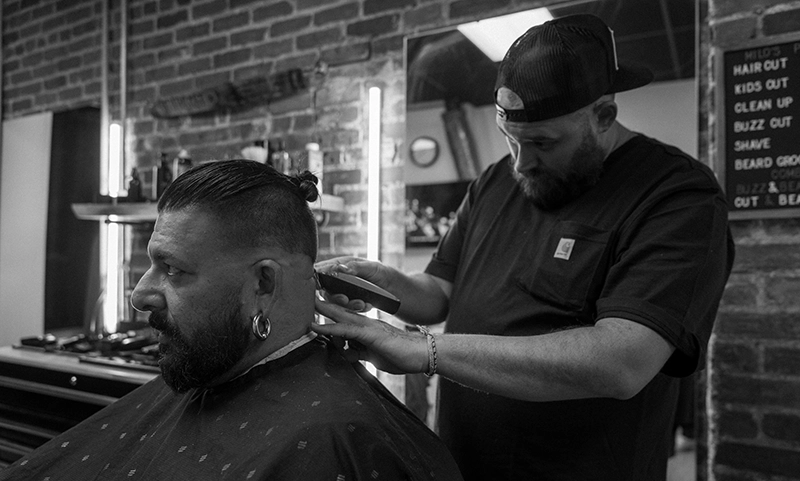
Photo Credit: Pendergast Barbershop
Finding Local Storytellers
The People Who Know the Story
There is a question I have started to believe we don’t ask often enough when we travel.
It isn’t:
What should we see?
It isn’t:
Where should we eat?
And it certainly isn’t:
What are the ten things we shouldn’t miss?
The question is much simpler.
Who should we meet?
More specifically:
Who knows the story of this place?
I’ve become increasingly interested in finding local storytellers—the people who can reveal what a destination looks like from the inside.
Because nearly everywhere we go, someone knows a story you can’t find on a tourism website, summarized on a historical marker, or adequately explained in a guidebook.
Sometimes that person is a historian.
More often, they aren’t.
They might be a farmer, artist, bartender, barber, chef, retired railroad worker, museum volunteer, shopkeeper, distiller, pastor, fisherman, artisan, newspaper editor, teacher, auctioneer, or simply the person everyone in town seems to know.
They are the unofficial keepers of a place.
And I want to find more of them.
Beyond the Things We See
Travel has become very good at telling us what to look at.
We have lists.
Lots and lots of lists.
The best restaurants. The top attractions. The most Instagrammable locations. The hidden gems. The must-see sights. The places you absolutely cannot miss.
There is nothing inherently wrong with any of that. Famous places are often famous for very good reasons.
But somewhere along the way, I think we started confusing seeing a place with understanding it.
Those are not the same thing.
You can stand inside a historic building without understanding what happened there.
You can eat a regional dish without knowing why people began making it.
You can walk through an old neighborhood without realizing why certain families settled there.
You can visit a farm without understanding the relationship between its soil, weather, crops, economics, and generations of people who have worked that land.
The missing ingredient is often a person.
Someone who can look at the same thing you’re looking at and say:
“Let me tell you why this matters.”
Suddenly, the place changes.
For me, finding local storytellers is becoming every bit as important as finding the places themselves.
Finding Local Storytellers Wherever We Go
I’ve become fascinated by the idea that almost every community has unofficial storytellers.
They may not think of themselves that way.
They aren’t necessarily standing behind a museum counter waiting for visitors. They probably don’t have a website. Some aren’t on social media.
But people know them.
Ask around long enough and eventually you’ll hear some version of:
“Oh, you need to talk to…”
That sentence interests me tremendously.
Because what follows might be someone who has spent 50 years repairing clocks.
Or a woman who knows the history of nearly every building on Main Street.
Or the third-generation owner of a family business.
Maybe it’s someone restoring an abandoned theater.
Perhaps it’s an artist whose work is inseparable from the landscape around them.
It could be the volunteer trying desperately to keep a small museum open.
Or the retired employee who remembers what happened inside a place long before it became an attraction.
These people possess something extraordinarily valuable.
Context.
They know what happened.
They know who was involved.
They know what disappeared.
They know what survived.
And sometimes they know the parts of the story nobody bothered to write down.
That is what makes finding local storytellers so interesting. We’re not simply collecting facts about a destination. We’re discovering the people who can help us understand why that destination became what it is.
The Human Chain
Another wonderful thing about finding storytellers.
One usually leads to another.
Ask someone who knows their community:
“Who else should I talk to?”
Then pay attention.
The historian sends you to the farmer.
The farmer tells you about the retired veterinarian.
The veterinarian remembers someone who worked at the old sale barn.
That person tells you about a café where everyone used to gather on Saturday mornings.
The café owner pulls an old photograph from a drawer.
Someone in the photograph has another story.
And suddenly you’ve fallen a rabbit hole.
Those are my favorite kinds of rabbit holes.
You aren’t really researching anymore.
You’re listening.
And the destination begins revealing itself through the people who actually know it.
This may be one of the best ways to find local storytellers: don’t try to find them all yourself. Find one.
Then ask that person:
“Who should I talk to next?”
Follow that trail long enough, and you may discover an entirely different version of a place than the one you originally came to see.
Not Every Great Story Happened Long Ago
There is a temptation to think that finding stories means finding history.
Sometimes it does.
But some of the most interesting stories are happening right now.
Someone is reopening a business their grandparents once operated.
Someone is restoring an abandoned building everyone else had given up on.
Someone is preserving a craft that almost disappeared.
Someone is experimenting with an old agricultural variety.
Someone is bringing a new cultural tradition to a small Midwestern town.
Someone is creating art that future generations may someday consider important.
Someone is fighting to keep a community festival, county fair, neighborhood institution, local newspaper, historic theater, or family business alive.
We don’t have to wait 50 years before deciding their stories matter.
We can meet them while the story is still being written.
Perhaps that’s one of the greatest privileges travel can give us.
Becoming a Collector of Stories
I have never been particularly interested in collecting souvenirs.
Stories are different.
A story changes what you remember about a place.
Years later, you may forget the hotel room number. You may forget what you ordered for dinner. You might even forget the name of the street you walked down.
But you’ll remember the person who leaned across the table and told you something you never expected to hear.
You’ll remember walking into a workshop and watching someone’s hands practice a craft learned decades earlier.
You’ll remember the farmer explaining the land.
You’ll remember the artist explaining the painting.
You’ll remember the retired worker pointing toward a building and saying:
“I was there when…”
Those moments stick.
They turn geography into memory.
That’s why finding local storytellers matters to me. They don’t merely tell us what happened. They give us a human connection to what happened.
And once that connection exists, we experience the place differently.
A New Trail for The Resonant Explorer
That is why finding local storytellers will become an ongoing part of The Resonant Explorer.
From time to time, we’ll introduce you to people we encounter along the way.
Some will be historians.
Others will be artists, makers, farmers, chefs, innkeepers, entrepreneurs, preservationists, craftspeople, eccentrics, dreamers, and people who don’t fit comfortably into any category.
Some may eventually become part of an Epic Explorations journey.
Others may never have anything whatsoever to do with one.
That’s okay.
A story doesn’t have to become a product to be worth telling.
Sometimes a remarkable person is worth meeting.
Sometimes a forgotten story deserves another audience.
Sometimes a place becomes more understandable because someone was willing to sit down and tell us what happened there.
And occasionally we’ll find something completely unexpected that sends us chasing another question.
That’s the point.
We’ll call these stories:
People Who Know the Story
These will be stories about the people who help us understand a place.
There doesn’t need to be a formula.
One article might introduce an artist whose work reveals something about a community. Another might take us into a workshop where someone is keeping an old craft alive. Another might begin with a farmer, a historian, a retired worker, a musician, a chef, or the person sitting at the end of the counter in a small-town café.
The common thread will be simple:
This person knows something worth hearing.
And then we’ll follow the story wherever it takes us.
Start Asking a Different Question
The next time you arrive somewhere new, be sure to see the famous things.
Visit the museum.
Walk Main Street.
Eat the local specialty.
Explore the historic district.
But somewhere along the way, ask somebody:
“Who’s the person around here I really ought to meet?”
Then ask the person you meet:
“Who should I talk to next?”
You may be surprised where that question takes you.
Because the most interesting thing about a place isn’t always what’s standing there.
Sometimes it’s the person standing beside you who knows the story.
And if we’re willing to listen, an ordinary stop on a map can become something entirely different.
It becomes a story.
A connection.
A memory.
And, every once in a while, the beginning of another journey.
Help Us Find the Next Story
And this is where you come in.
We don’t want to find local storytellers on our own.
Some of the best stories aren’t found through research. They begin because someone says:
“You really need to talk to this person.”
So, who do you know?
Maybe it’s someone in your hometown who remembers stories few others know. A farmer, artist, craftsman, historian, chef, shopkeeper, musician, preservationist, entrepreneur, teacher, collector, volunteer, or simply one of those wonderfully interesting characters who seems to know a little bit about everything.
Maybe they have spent a lifetime preserving something.
Maybe they’re creating something remarkable right now.
Maybe you can’t quite explain why we should meet them—you know that we should.
Introduce us. Or send us their name and tell us why we ought to talk with them.
We don’t need to know where the story leads.
In fact, we’d rather not.
Because sometimes one conversation leads to another person, which leads to an old photograph, a forgotten building, a family story, a strange piece of history, or a question nobody thought to ask.
And before we know it, we’re down another rabbit hole.
Those are exactly the rabbit holes we’re looking for.
So if you know someone whose story deserves to be heard—or someone who knows where the interesting stories are hiding—we’d love to hear about them.
Who should we talk to next?
Let’s see where the rabbit hole takes us.

Explore Your World Epically

Robert Riesmeyer is the Founder and Travel Concierge/Host of Epic Explorations and the voice behind The Resonant Explorer. A lifelong traveler, storyteller, and relentlessly curious explorer, Robert looks beyond the obvious—into the people, history, culture, and unexpected stories that give a place meaning.
Based in the Kansas City area, he explores the world, follows intriguing rabbit holes, and seeks experiences most travelers overlook. For Robert, travel isn't about collecting destinations. It's about curiosity, connection, wonder, and discovering the stories that stay with us long after we return home.