
Bio Habitat Hotel, Armenia Colombia
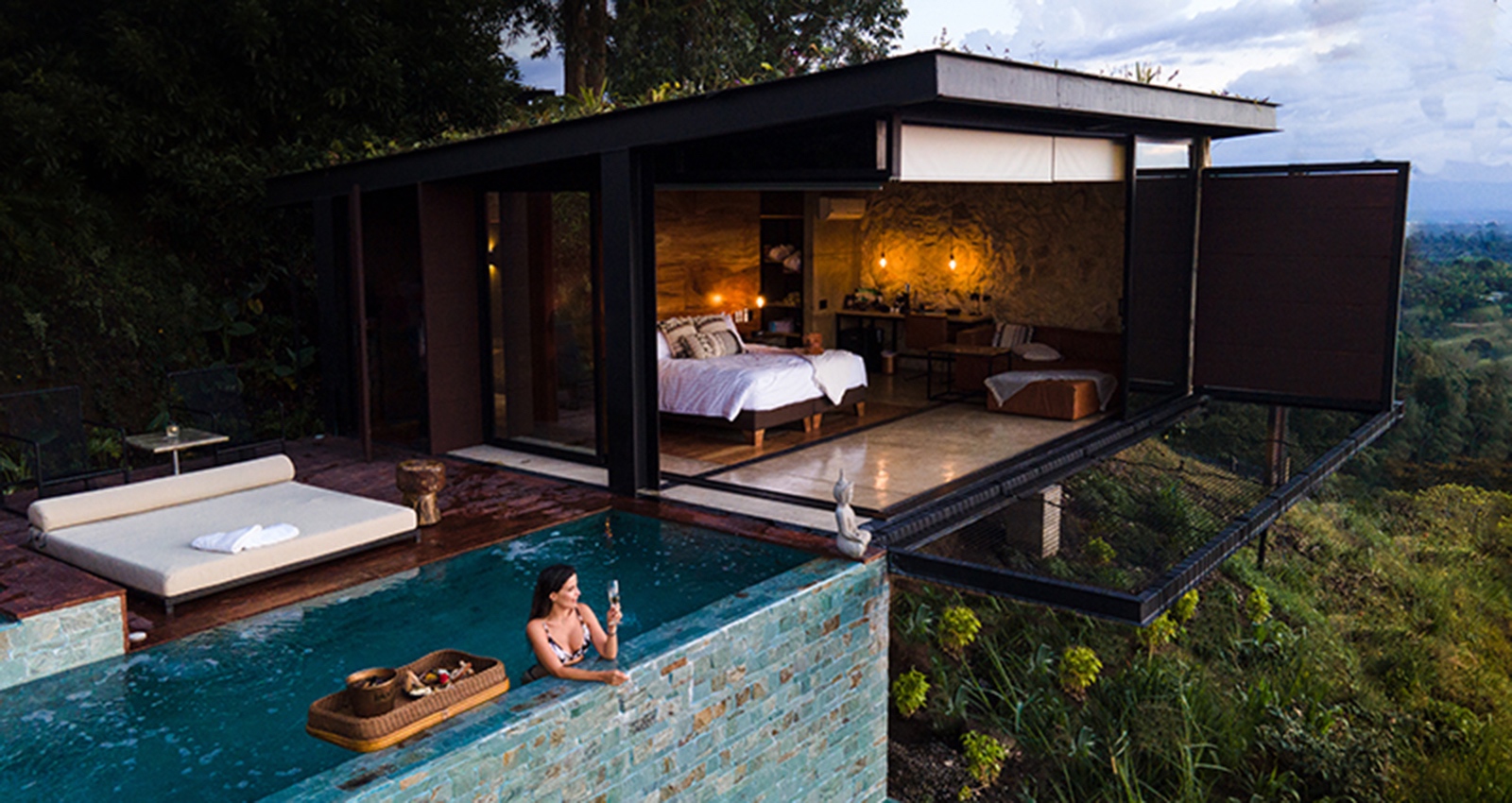
A Remarkable Place Waiting for Its Larger Story
Some journeys begin with a destination. Others begin with a person, an encounter, or a question we cannot stop asking.
And sometimes, they begin with a hotel.
Bio Habitat Hotel, tucked into the mountains and native forest of Colombia’s Quindío region, is one of those places. Its architecture, setting, and connection to the surrounding landscape immediately captured our curiosity. We know there is something here worth experiencing. What we do not yet know is the larger story that should surround it.
That is precisely why Bio Habitat Hotel is On Our Radar.
What Caught Our Attention
Bio Habitat does not appear to be a conventional resort placed on top of a beautiful landscape. Its accommodations—or “habitats,” as the property calls them—are designed around two distinct environments: mountain and forest.
Some look across the Andes, coffee plantations, gardens, and native forest. Others are elevated among the trees, where birds, foliage, and the sounds of the forest become part of the stay. With only 28 habitats spread across eight accommodation styles, the property appears intimate enough to feel connected to its surroundings rather than separated from them.
That is the first spark.
But what interests us even more is the property’s location in Quindío, within Colombia’s Coffee Cultural Landscape. Bio Habitat is near Armenia and within reach of Salento, Filandia, the Cocora Valley, coffee farms, cloud forests, and the high-altitude landscapes of the Colombian Andes.
It feels less like a hotel that should be visited in isolation and more like a possible base for understanding a much larger place.
What Could Begin Here?
We can imagine mornings that begin with birdsong in the forest canopy. The hotel reports that more than 150 bird species have been identified within its forest, opening the possibility of exploring Colombia’s remarkable biodiversity with someone who can help us see—and hear—what most visitors would otherwise miss.
We can imagine following coffee beyond the familiar tasting experience: meeting growers, walking the land, examining the effects of elevation and microclimate, and understanding how coffee shapes the culture and economy of Quindío.
Perhaps this could connect with our developing interest in Colombia’s distinctive coffees, including Geisha and other high-elevation varietals. Or perhaps the stronger thread will emerge through the region’s wax palms, cloud forests, conservation work, traditional towns, food, artisans, or the people whose families have lived among these mountains for generations.
Bio Habitat itself may offer another part of the story. Its Bio Trail introduces guests to practices including solar-energy production, wetland water treatment, permaculture, and the planting of native trees. That creates an interesting question: can a hotel help travelers understand a landscape rather than merely provide a beautiful place from which to observe it?
We do not yet know which of these ideas will become the connecting thread.
The Questions We Are Asking
Before Bio Habitat moves beyond our radar, we want to learn more:
- Who are the people in Quindío whose stories would give this journey its heart?
- Could we explore coffee through growers, agronomists, roasters, pickers, and families rather than through a conventional plantation tour?
- How might the region’s birds, wax palms, cloud forests, and high Andean ecosystems become part of a meaningful story about conservation?
- What can Salento, Filandia, Armenia, and the smaller communities between them reveal about contemporary Colombian life?
- Does Bio Habitat work best as the center of the experience, a restorative conclusion, or one chapter within a broader Colombian journey?
- Could this property become part of our developing Colombia coffee concept—or does it point toward an entirely different story?
Those questions are more important to us right now than a proposed itinerary.
Why It Is On Our Radar
Bio Habitat Hotel has the qualities that often signal the beginning of an Epic Explorations journey: a strong sense of place, distinctive architecture, access to the natural world, and a location surrounded by stories we have only begun to uncover.
But a beautiful property alone does not make a journey.
We still need to spend time in the region, meet the right people, listen carefully, and discover what connects the hotel to the deeper character of Quindío. Until that thread reveals itself, Bio Habitat remains exactly where it belongs—On Our Radar.
Something is here.
We just do not know what it will become yet.
What Do You See Here?
Have you stayed at Bio Habitat Hotel or explored Colombia’s coffee country? Do you know a farmer, naturalist, conservationist, chef, artisan, historian, or storyteller in Quindío whom we should meet?
We would love to hear what captured your attention—and what you believe travelers should understand about this corner of Colombia.