
Antarctica: At the Edge of Everything
On Our Radar
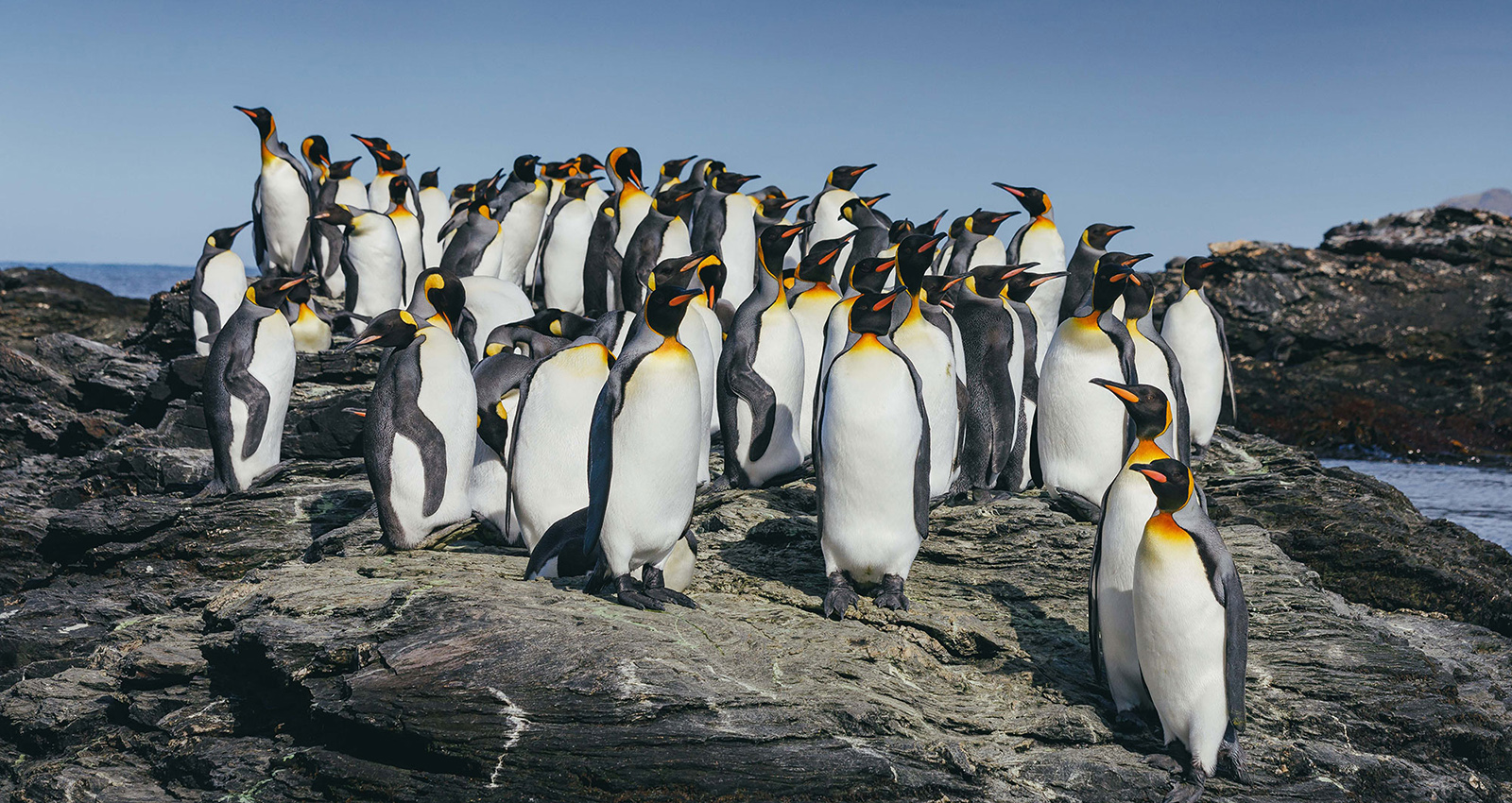
Antarctica has a way of lingering at the edge of a traveler’s imagination.
It is the continent at the bottom of the world—a place of immense ice, restless seas, improbable wildlife, and horizons that seem to stretch beyond anything familiar. There are no permanent communities, no traditional culture to encounter, and no local cuisine waiting to be discovered. Nearly everything we ordinarily use to understand a destination has been stripped away.
And perhaps that is exactly what makes Antarctica so intriguing.
We know there is an Epic Explorations journey somewhere in this vast white wilderness. We simply do not yet know what story will carry us there.
More Than the Seventh Continent
It would be easy to build a journey around the familiar Antarctic milestones: crossing the Drake Passage, watching penguins gather along the shore, navigating among sculpted icebergs, stepping onto the continent, and raising a glass to reaching the seventh continent.
Those experiences would undoubtedly be extraordinary.
But simply arriving in Antarctica is not enough of a reason for us to create a journey.
We are looking for the thread beneath the expedition—the question, person, or story that transforms a remarkable voyage into something that stays with us long after we return home.
Could this become a journey into the history of polar exploration and the people who willingly sailed beyond the known world?
Could it explore the international scientific community and what researchers are learning from the ice, ocean, atmosphere, and wildlife?
Could it examine what happens within us when the usual distractions disappear and we find ourselves surrounded by silence, scale, and elemental beauty?
Or is Antarctica part of a larger story that begins well before the continent appears?
Perhaps the Journey Begins Somewhere Else
Most Antarctic voyages begin in southern Argentina or Chile, but the gateway should be more than a convenient place to board a ship.
Ushuaia, Tierra del Fuego, Patagonia, and the Beagle Channel possess their own stories of Indigenous peoples, explorers, settlers, sailors, scientists, and communities shaped by life at the end of the inhabited world. A thoughtfully designed journey might begin there, allowing the human landscape of the far south to prepare us for what lies beyond it.
Another possibility leads through the Falkland Islands and South Georgia.
South Georgia is not part of Antarctica itself, yet its immense wildlife colonies, whaling history, scientific presence, and connection to Sir Ernest Shackleton could add a profoundly human dimension to an Antarctic expedition. It may be there—in the relationship between exploration, exploitation, survival, science, and conservation—that the larger story begins to emerge.
We are also curious about the people aboard the expedition vessels. Naturalists, marine biologists, historians, photographers, geologists, glaciologists, and veteran expedition leaders may be the storytellers who help us understand what we are witnessing.
In Antarctica, the right expedition team may be every bit as important as the route.
A Place That Demands Restraint
Antarctica cannot be approached like an ordinary destination.
The Antarctic Treaty System designates the continent as a natural reserve devoted to peace and science. Tourism operates within strict environmental guidelines intended to protect wildlife, historic sites, vegetation, and fragile ecosystems. Weather and ice determine where vessels can travel and whether a landing is possible. There are no guarantees—and there should not be.
Any journey we consider must begin with responsible expedition practices, credible operators, strong safety standards, appropriate vessel size, and genuine respect for the environment.
That responsibility is not a limitation on the experience. It may become one of its most meaningful elements.
Antarctica asks travelers to accept that we are visitors in a place that does not exist for our convenience. We may have to remain flexible, follow the judgment of experienced expedition leaders, and allow the continent—not an itinerary—to determine what happens next.
There is something wonderfully humbling about that.
The Questions Still Ahead of Us
Before Antarctica moves from On Our Radar into What Are We Dreaming About?, we need to answer several important questions:
- Does the journey focus on wildlife, scientific discovery, polar history, photography, personal reflection—or a thoughtful combination of them?
- Is the Antarctic Peninsula enough, or does the story need to include South Georgia, the Falklands, Patagonia, or Tierra del Fuego?
- What vessel size and expedition style best support meaningful landings and personal experiences?
- Who are the scientists, historians, naturalists, and expedition leaders we want our travelers to learn from?
- Can we create opportunities for deeper conversations beyond the standard onboard lecture program?
- How do we approach Antarctica responsibly without reducing it to another item on a travel checklist?
- Is there space within the journey for stillness—for simply watching, listening, and absorbing the immensity of the place?
Those questions matter more to us than deciding how many penguin colonies or landing sites might appear on an itinerary.
Why Antarctica Remains on Our Radar
Antarctica represents one of travel’s great edges: the edge of the map, the edge of human habitation, and perhaps even the edge of our ability to comprehend the natural world.
We can already imagine standing on the deck in the long austral light, listening to the crack of distant ice and watching an unfamiliar world slowly emerge from the mist. What we cannot yet see is the complete journey surrounding that moment.
And that is all right.
For now, Antarctica remains On Our Radar—an extraordinary possibility waiting for the right story, the right people, and the right reason to go.
What Would Take You to Antarctica?
Would you be drawn there by the wildlife, the ice, the history of exploration, the science, the photography—or simply the opportunity to stand somewhere that feels almost beyond the world you know?
If Antarctica has captured your imagination, we would love to know what you hope to discover there.